
“How do I get ChatGPT to recommend my company?”
The question is coming up more and more often in SEO and marketing conversations. And it makes sense. Some of the discovery that once almost always ended on a search results page can now also happen inside an AI-generated answer.
The problem is that an industry of overly simple answers has grown around that question: create a llms.txt, fill your site with FAQs, add schema, repeat your brand, replace SEO with GEO, and wait for the machines to discover you.
The reality is much less spectacular and, at the same time, more interesting.
We can work to improve the conditions that allow a company to be found, understood, and used as a source. What does not exist is a switch that makes you “rank in ChatGPT.”
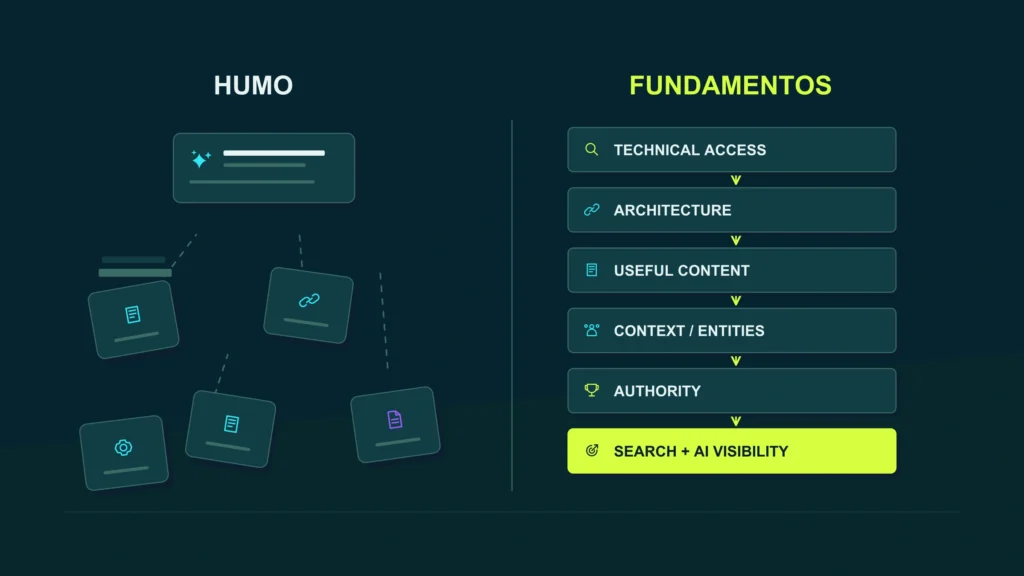
Search is changing. The fundamentals have not disappeared.
Can you do SEO for ChatGPT and AI search?
Yes, although it is worth defining what that actually means.
We can optimize a website so systems that consult public information can access it, make its content clearer, build authority, produce information that is more useful than average, and measure part of the visibility we gain.
What we cannot do is guarantee that ChatGPT will mention a company for a specific query or that Google will include a particular URL in an AI Overview.
This matters because we are grouping several different surfaces into one conversation.
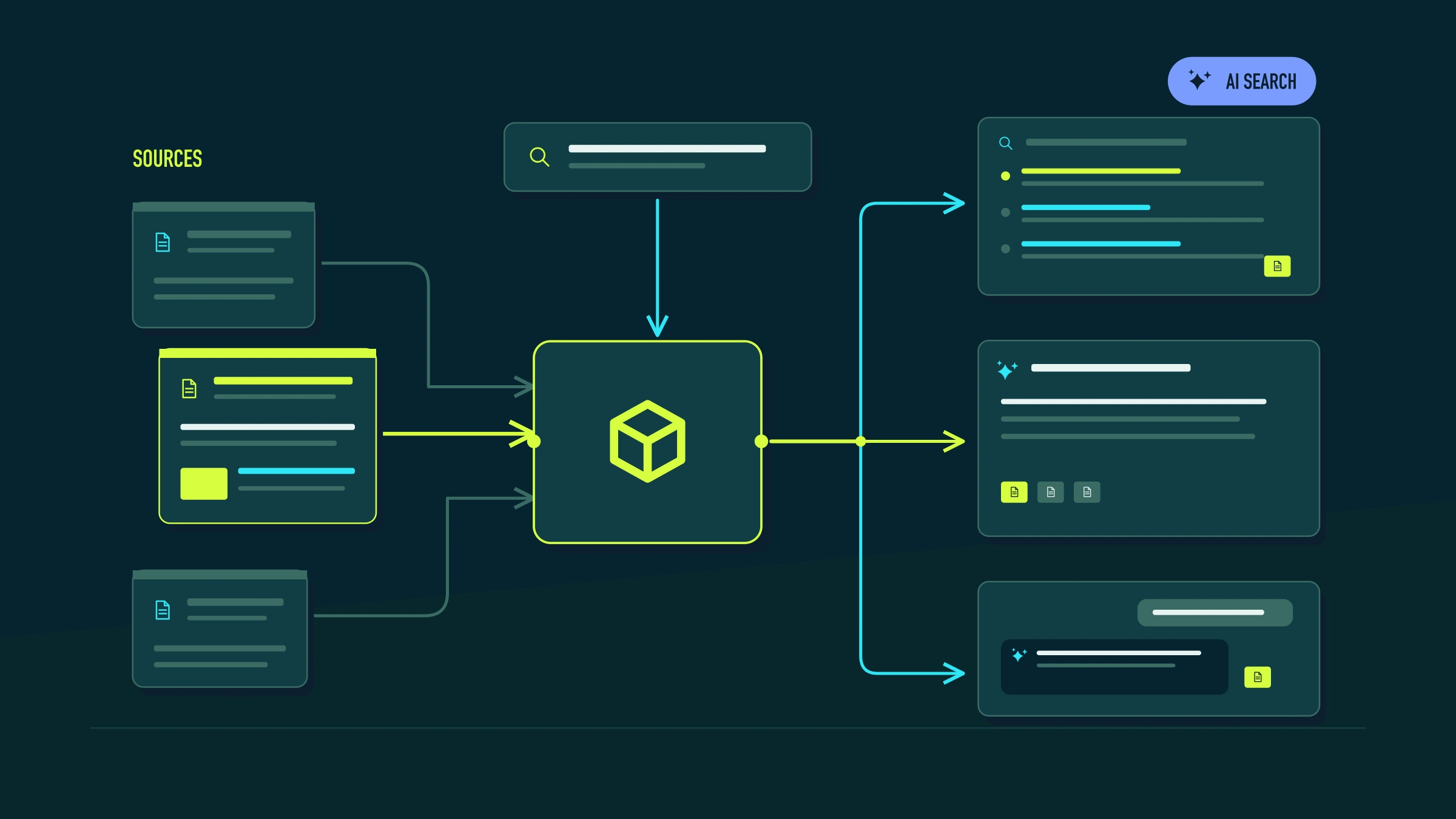
Traditional SEO focuses on a website’s ability to appear and compete in search engines. Google AI Overviews and AI Mode use Google’s search systems as part of their generative infrastructure. ChatGPT Search, meanwhile, can consult public sources to build an answer and cite pages when appropriate.
They do not work exactly the same way, but they are not separate universes either.
Google is quite explicit about this: its SEO best practices remain relevant to generative search because AI Overviews and AI Mode rely on Search’s core ranking and quality systems.
That point should change the conversation.
Before asking how to “do GEO,” it is worth checking whether the website can already compete properly in SEO.
SEO, AEO, and GEO: what actually changes?
The acronyms can be useful as long as they do not replace analysis.
| Concept | What it focuses on | What it is trying to achieve |
|---|---|---|
| SEO | Search engines, architecture, content, authority, and experience | Gain organic visibility and capture demand |
| AEO | Engines and experiences that answer questions directly | Increase the likelihood of being used in answers |
| GEO | Generative systems that synthesize information from multiple sources | Improve presence within AI-generated experiences |
The conceptual difference is real. The operational separation is much smaller than it is sometimes made out to be.
A technically blocked website is not fixed by replacing SEO with GEO.
Generic content does not become interesting to an AI because we add more questions and answers.
A company with no clear signals about who it is, what it does, or why it deserves trust does not solve that problem by creating a new file.
Google even dedicates part of its current guidance to debunking some ideas that have become popular around AEO and GEO. Its recommendation remains to build a clear technical structure and original, useful, non-generic content.
The label changes. Much of the serious work remains.
How a company can appear in ChatGPT Search
Here there is one very concrete technical action worth checking.
OpenAI says any public website can appear in ChatGPT Search. To make it easier for its content to be discovered, displayed, linked, and cited in summaries or snippets, the site should not block OAI-SearchBot.
That does not mean that adding:
User-agent: OAI-SearchBot
and allowing access will automatically produce citations.
It only means we are removing an access barrier.
And there is an important distinction that often gets lost in articles about “SEO for ChatGPT”:
OAI-SearchBot and GPTBot do not serve the same purpose.
OAI-SearchBot is related to search discovery. OpenAI separately states that publishers who want to exclude their pages from possible training uses should manage GPTBot.
Therefore, reviewing robots.txt should be part of a ChatGPT Search visibility audit.
But it is the starting point, not the strategy.
Then the hard questions remain: does the page actually answer the query? Does it add something other sources do not have? Is it up to date? Is it clear? Is there enough context around the company and the topic?
How AI Overviews and AI Mode work from an SEO perspective
We do not know —and should not pretend to know— the formula Google uses to decide every source included in a generative answer.
What we do officially know is enough to work with.
Google explains that its generative features rely on its core search and quality systems to retrieve relevant, up-to-date pages from the index. It also insists that SEO best practices remain the foundation.
That is why I still prioritize fairly traditional questions:
Can Google crawl the page?
Can it index it?
Does it understand where the page fits within the site?
Does it solve a real need?
Does it provide something different from the other twenty results?
Does the information appear reliable and current?
Are there good reasons to use that source?
Then we can think about how the presentation of that information changes inside a generative experience.
Reversing that order usually produces a lot of hype and very little result.
The 7 things I would actually work on for a company
1. Technical accessibility
Before talking about citations, we need to make sure the relevant systems can access the content.
That means reviewing indexing, robots, canonicals, HTTP responses, rendering, and possible security or bot-protection barriers.
For ChatGPT Search, I would also specifically check access for OAI-SearchBot.
It is not the most exciting part of the strategy. It is one of the easiest to forget.
2. Understandable architecture
A company can have a hundred good articles and still explain poorly what it does.
The architecture should make the relationships between the company, services, products, locations, problems, solutions, and content clear.
That helps users, helps search engines, and creates a much more coherent context around a brand’s entities.
The web design and development is also part of this conversation: SEO and architecture should not be introduced only after the website is already finished.
3. Original, non-commodity content
This is probably one of the most relevant recommendations in Google’s new guidance.
Google explicitly uses the concept of non-commodity content: content with a point of view, experience, or information that almost any website —or any generative model— could not have produced simply by changing a few words.
“10 benefits of SEO” adds little.
A real analysis of how branded vs. non-branded traffic changed for a company, what decision caused the change, and what happened afterward adds much more.
The same applies to first-party data, experiments, original photography, real methodologies, experience-based comparisons, technical documentation, and lessons from projects.
4. Real experience and knowledge
One of the best ways to differentiate content now is also one of the oldest: know what you are talking about.
If a company installs facades, I want to learn from someone who inspects facades.
If it sells ERP software, I want information that reflects problems that arise during real implementations.
If it works in SEO, I want to see analysis, mistakes, decisions, and results. Not another rewritten definition of “what is a keyword.”
AI makes text production cheaper. That is precisely why first-hand experience becomes more valuable.
5. Clear entities and context
A website should make it easy to understand:
who the company is, what services it offers, which markets it works in, who is behind it, what experience it has, and how its content is connected.
This does not mean filling every page with schema and hoping a model will “understand the entity.”
It means reducing ambiguity.
Structured data can still be useful when it matches visible content, but Google says there is no special schema required for its generative features.
6. Authority and external references
What a company says about itself matters. What other reliable websites say about it matters too.
Mentions, relevant links, industry relationships, media coverage, citable resources, and a coherent digital reputation still make sense here.
But chasing fake mentions purely to influence generative models is exactly the kind of shortcut I would not recommend.
Google also warns against pursuing inauthentic mentions as a generative visibility tactic.
7. Measurement
This area has improved significantly in 2026.
Since August 31, Google has rolled out globally the generative AI performance report in Search Console.
It currently lets you analyze impressions in AI Overviews and AI Mode, trends over time, and dimensions such as pages, countries, and devices.
That already removes part of the speculation.
Not everything related to AI visibility is perfectly attributable. But we now have more official information with which to make decisions.
Not sure whether your site is ready for Search + AI?
At Cubo SEO, we analyze the technical foundation, architecture, content, and visibility to identify what is worth improving first.
Explore our SEO service
What type of content is more likely to be useful as a source
There is no format that guarantees a citation.
The better question is:
What can we publish that adds information that is not already available in the same way on twenty other pages?
Some possibilities:
- first-party data;
- project results;
- applied methodologies;
- experience-based comparisons;
- studies;
- genuinely specialized definitions;
- original photographs or demonstrations;
- answers to highly specific problems;
- local information;
- tools;
- resources that other professionals may need to cite;
- updated content when the context changes.
This aligns closely with Google’s emphasis on original, useful, non-generic content. Google also warns that generating large numbers of pages to cover every possible search variation can end up becoming scaled content with little real value.
The paradox is interesting: the cheaper content becomes to produce, the less advantage there is in simply producing more of it.
What I would not do to “rank in AI”
This is where it is important to separate expectations from strategy.
I would not create hundreds of generic articles. A huge library of variations of the same thing does not make a company a better source.
I would not invent mentions or authority. Beyond the obvious credibility problem, Google already warns about this idea in its generative search documentation.
I would not treat llms.txt as the new robots.txt. Google says it can remain in place if other services use it, but Google Search ignores it and it neither improves nor harms Search visibility or rankings.
I would not add schema that does not match the content. There is no special schema for generative AI in Google.
I would not write exclusively for the machine. Google also says there is no need to rewrite content in a particular way for its generative features or artificially split it into tiny fragments.
And I would not promise that a company will appear in ChatGPT.
That last point is probably the most important.
We can improve the conditions. We do not control the final answer.
How to measure visibility in AI search in 2026
With Google, the situation is now much more concrete.
The new Search Console report shows impressions, not a magical dashboard telling you “how many sales AI generated.”
We can analyze which pages appear, how generative visibility changes over time, and which countries or devices those impressions come from. It currently covers AI Overviews and AI Mode.
There is now also a specific control in Search Console to include or exclude a site from Google Search’s generative AI features. The inclusion option allows links and content to appear or help ground generative answers.
For ChatGPT Search, measurement is different.
OpenAI says referral URLs from ChatGPT include utm_source=chatgpt.com, which makes that traffic identifiable in tools such as Google Analytics.
That helps answer:
How much traffic arrives?
Which pages receive visits?
What happens afterward?
What we still should not confuse is referral traffic with all brand visibility inside answers. A brand can be mentioned without generating a click. An answer can also exist without a web search.
There are still measurement gaps.
Acknowledging them is better than inventing precision.
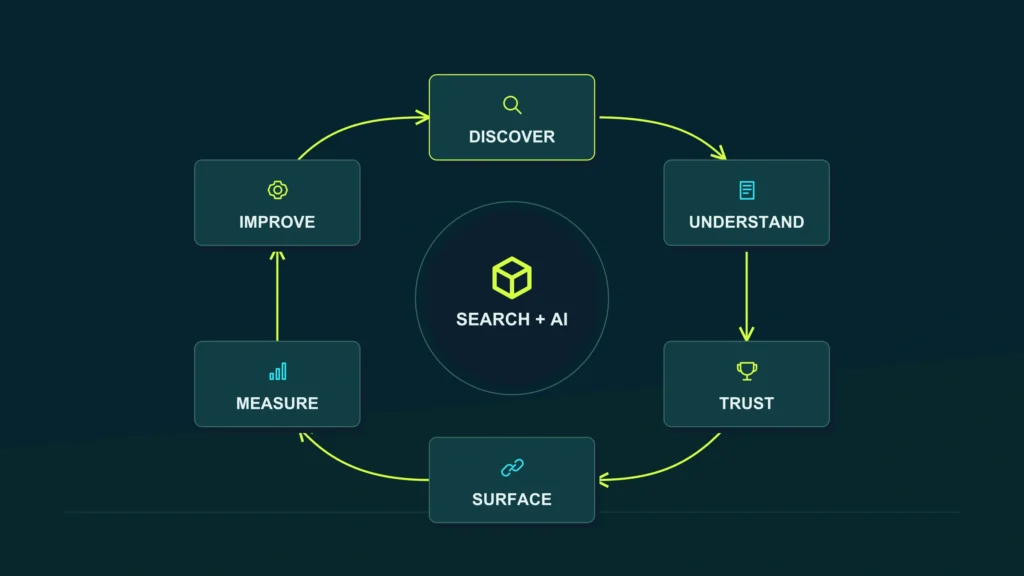
A practical framework for companies: Search + AI
At Cubo SEO, I would reduce it to six questions.
Discover
Can the relevant systems access our information?
Understand
Is it clear who we are, what we do, and how our pages relate to one another?
Trust
Do we have enough experience, evidence, and authority to be considered a reliable source?
Surface
Do we have content that adds something useful or specific enough to surface?
Measure
Can we detect impressions, referrals, traffic, and behavior?
Improve
What have we learned, and what is worth working on next?
It is not a formula for “winning ChatGPT.”
It is an organized way to stop chasing isolated tactics.
So, do I need GEO or do I need SEO?
You probably need to stop debating the name for a few minutes and review the website.
If you have indexing problems, pages competing with each other, weak architecture, generic content, little authority, or you do not know what is generating demand, calling a new layer of work GEO does not solve any of those problems.
If the SEO foundation is already solid, then it does make sense to expand the analysis.
Review access for new crawlers.
Monitor generative surfaces.
Develop more differentiated content.
Strengthen entities.
Measure AI Overviews and AI Mode.
Analyze referrals from ChatGPT.
Experiment.
Generative search deserves attention. It just does not need to destroy everything we have learned about search in order to justify its existence.
Frequently asked questions
Can I pay to appear in ChatGPT Search?
OpenAI’s documentation on organic search does not describe a system for buying a citation or recommendation inside a ChatGPT Search answer. A company being able to advertise in ChatGPT products is a different matter from being used as an organic source.
Should I allow OAI-SearchBot?
If you want to make it easier for your website content to be discovered, displayed, cited, and linked in ChatGPT Search, OpenAI recommends not blocking OAI-SearchBot.
Are OAI-SearchBot and GPTBot the same thing?
No. OpenAI documents OAI-SearchBot in relation to search and discovery, while GPTBot can be blocked when a publisher wants to exclude pages from possible training uses.
Do I need an llms.txt file?
Not to improve visibility in Google Search. Google says it ignores llms.txt: keeping it does not help or hurt rankings or visibility there. Other services may choose to use it, so the answer depends on the ecosystem you want to cover.
Do I need special schema for ChatGPT or Google AI?
Google says there is no special schema.org markup required for its generative experiences. Standard structured data still makes sense when it accurately describes visible content. For ChatGPT Search, OpenAI does not publish a “schema for ranking in ChatGPT” in its current guidelines.
Does GEO replace SEO?
I would not frame it that way. GEO can be a useful way to group work specifically related to generative visibility, but much of the foundation —access, architecture, content, authority, and measurement— remains directly connected to SEO.
Can I guarantee that I will appear in AI Overviews or ChatGPT?
No. We can improve the ability to compete and remove barriers, but no platform guarantees inclusion for a specific query.
The advantage in the coming years will probably not come from finding a secret file before your competitors do.
It will come from doing the difficult things better: producing information worth using, demonstrating real experience, building an understandable website, earning legitimate references, and measuring rigorously enough to distinguish a trend from an opportunity.
Google is already bringing these experiences into Search Console. OpenAI already provides clear guidance to make discovery in ChatGPT Search easier. The surface is changing.
The question now is whether our strategy is also ready to change without losing the fundamentals.
If you want to understand where the real opportunity lies in your case, you can request a strategic assessment.